A doubtful prognosis
Wellness on the ropes!

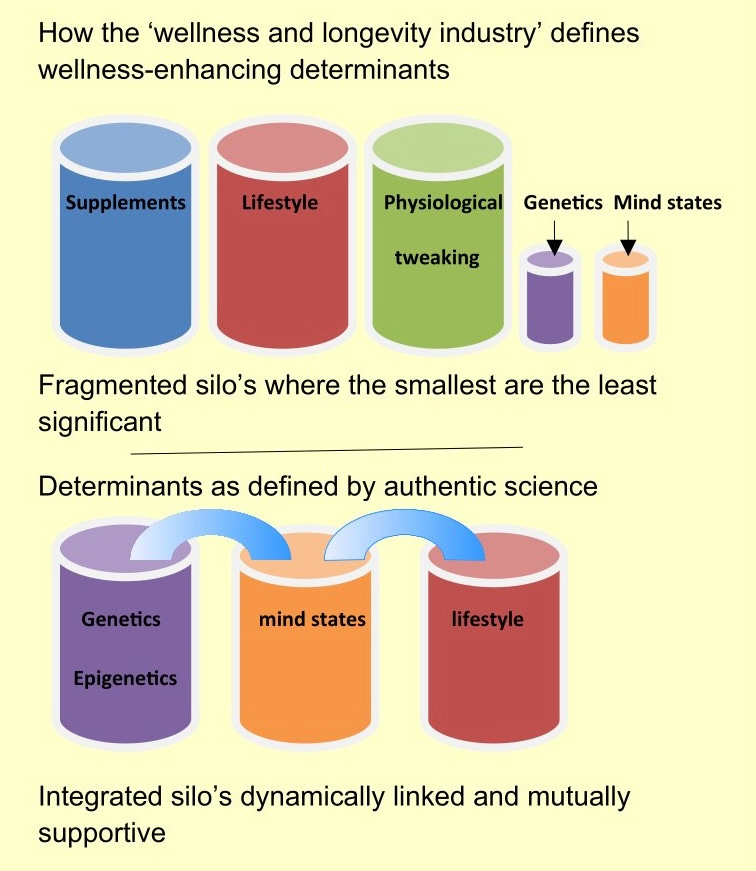
Effective wellness intervention requires an integrated approach of multiple modalities. Each modality in turn would need to be adequately researched such that the relative effectiveness of each component is significant.
The current issue with the burgeoning Wellness and Longevity Industry (WLI) is that they seize upon items which have minimal or untested relative relevance to wellness and longevity enhancement and amplify them to pseudo-scientific proportions. Said in another way, amplifying the pixel at the bottom right corner of your TV screen to fill a far bigger part of the screen becomes a distortion of reality, incongruent with the existing big picture!
Laboratory assays of these individual items is also superfluous since in themselves they’re relatively insignificant and require no direct intervention. But that’s not good for business ... Consequently emerges the WLI drive to hungrily identify such items as flagging mitochondrial function, NAD+, glycoprotein assays etcetera, so as to satisfy the self-enrichment need. This occurs against the background of highly questionable and potentially dangerous interventions such as mega-vitamin infusions, miscellaneous supplements, ozone therapy, peptide applications, cold therapy, red light therapy ...
With their emphasis on supplements and physiological tweaking the WLI have painted themselves into a mechanistic biomedical corner and distanced themselves from the more holistic and inclusive biopsychosocial space. The core of biopsychosocial medicine is the cognitive and emotional mind states that reflect the nature-nurture heritage as well as current psychosocial factors which influence much of physiology via two-way neuro-immune pathways.
In this way nature-nurture adversity creates a neuropsychological imprint which may be triggered in adulthood by psychosocial factors resulting in a mind state of hopelessness, meaninglessness coupled with anxiety. It is this mind state which gives rise to chronic inflammation. Chronic inflammation in turn suppresses mitochondrial function (compromising energy production), decreases IgG-based glycoprotein (compromising immunity) and underpins cardiovascular disease, cancers and neurodegenerative disease (Alzheimer’s and Parkinson’s).
I would suggest that the WLI is becoming more a part of the problem rather than the solution to the ills of our time. It is a case of redundant complexity with a doubtful value contribution. We require less self-enrichment and narcissistic appetite on the part of the WLI and more self-awareness, self-respect and sensitivity for the authentic needs of the client/patient/consumer.
Primum non nocere or “do no harm”, remains the cornerstone of medical practice and applies to all medical practitioners. It is my contention therefore that individuals that do not have appropriate medical credentials and who are not licensed and appropriately regulated, should not be permitted to provide direct wellness intervention nor provide medical instruction or opinions.
Therefore I pose the question: Is there a prognosis for the WLI transcending its pseudo-scientific, mechanistic and self-enriching corner and providing real value in regard to wellness?
Join us here in the biopsychosocial space.
I totally agree Ian.